
A small Amitabha figure is best approached with two kinds of attention: close observation of the object in front of you and an awareness of the much larger Buddhist visual traditions that inform its name.
Begin with the figure, not a promise
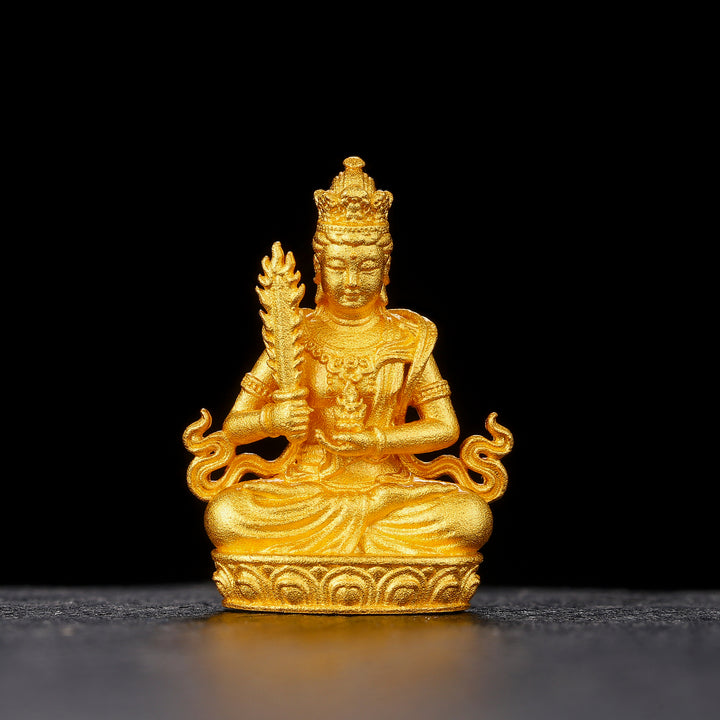
The supplied object is a compact seated Buddha figure with a lotus base, a quiet expression, and a robe arranged across the body. Those features invite close looking, but they do not establish the material, age, ritual use, or provenance of this particular object. The name Amitabha gives the article a useful cultural starting point; the image itself should still be described honestly as a contemporary small figure.
Amitabha is a tradition with many visual languages
Amitabha appears across Asian Buddhist art in many media, regions, and formats. The Metropolitan Museum of Art records an eighteenth-century Korean seated Amitabha with downcast eyes, long earlobes, and a loose robe. Its record is a reminder that a named Buddha can be represented through changing local styles rather than one universal silhouette. A small modern figure can echo this long visual history without being a replica of a museum object.
The larger story behind a quiet seated figure
In Pure Land visual culture, Amitabha is not usually imagined as a solitary character with a single dramatic episode. The story is often told through an assembled place: Amitabha at the centre of a Western Paradise, surrounded by bodhisattvas, disciples, guardians, and attendants. The Metropolitan Museum of Art's Korean example makes this structure visible. Its central Amitabha sits on a lotus above a dais, while the surrounding figures turn the image into a shared devotional scene rather than a portrait of one individual.
That setting gives a small standalone Buddha another layer of meaning. It may not reproduce the whole assembly, and the supplied object should not be presented as a historical reconstruction, but the seated posture and lotus base can still be read as echoes of a much broader pictorial world. Looking at the figure this way is more informative than assigning it a generic promise of calm or luck.
Why context matters more than one isolated detail
Amitabha is often encountered within a larger devotional setting. The Met's account of a Korean Western Paradise assembly places Amitabha at the center of a group of bodhisattvas, disciples, guardians, and attendants. That wider setting is useful when viewing a single small figure: a sculpture can point toward a larger visual world even when its own scale is intimate.
A practical way to look
First notice the seated posture and lotus base. Then look at the robe folds, hands, and head treatment without forcing every mark into a universal code. Finally, separate three questions: what the supplied figure visibly shows; what the Amitabha name means within Buddhist art; and what the maker may have chosen for a compact contemporary design. This keeps the encounter attentive and avoids turning a sacred image into a list of guaranteed outcomes.
Related figures, different histories
Buddhist figures often share a seated format while carrying different histories and attributes. Comparing this image with a Ksitigarbha figure or a Thousand-Armed Guanyin image can make the differences in staff, arm arrangement, crown, and compositional rhythm easier to notice. The point is not to rank them, but to see how each figure is built.